Respiratory
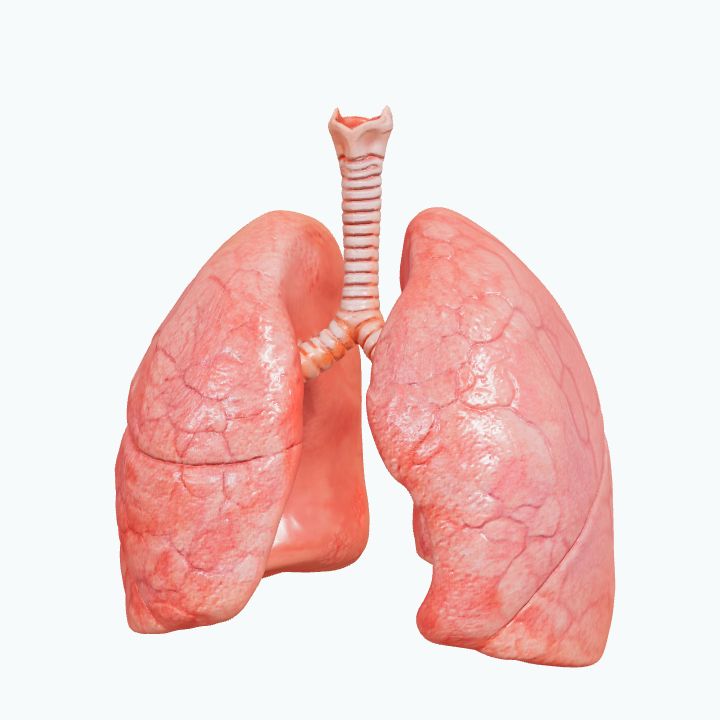
The respiratory system consists of the upper and lower respiratory tracts, pulmonary parenchyma, and thoracic ventilatory cage responsible for oxygen uptake and carbon dioxide release.
Quantitative Metrics & Physiological Scale
Microscopic spherical sacs providing vast diffusion surface
Equivalent to half a tennis court of gas exchange membrane
Dichotomous airway division from trachea to alveolar ducts
Normal rhythmic tidal volume ventilation frequency
Physiological Role & Homeostasis
External respiration and alveolar-capillary passive oxygen/CO2 diffusion
Systemic blood acid-base balance maintenance via CO2 ventilation regulation
Laryngeal airflow phonation and mucociliary clearance defense
Right Lung vs Left Lung Anatomical Differences
| Feature / 比较维度 | Right Lung / 右肺 | Left Lung / 左肺 |
|---|---|---|
| Lobar Segmentation / 肺叶划分 | 3 Lobes (Superior, Middle, Inferior) / 3 个肺叶(上叶、中叶、下叶) | 2 Lobes (Superior, Inferior) / 2 个肺叶(上叶与下叶) |
| Interlobar Fissures / 叶间裂形态 | Horizontal & Oblique fissures / 具有水平裂与斜裂两条完整叶间裂 | Oblique fissure only / 仅有一条斜裂 |
| Volume & Cardiac Impression / 容量与心脏压迹 | Larger volume (~10% heavier); no cardiac notch / 容积约大 10%;底面受肝脏推挤略宽短 | Prominent cardiac notch & anterior lingula / 具明显心切迹与心前缘下端狭长的肺小舌 |
Vital Organs & Structures
How to Study This System in 3D
Use slice planes to inspect bronchial tree distribution and pulmonary vascular branching within each lung lobe.
Pair with Skeletal and Muscular layers to visualize rib cage excursion and diaphragm dome dynamics.
Explore Synergistic Anatomical Systems
For educational use only; not medical advice, diagnosis, or treatment.